When Mark Neill’s wife gave birth to their second son, he should have been focused on the joy of welcoming a new child into the family. Instead, nine days later, he received a three-minute phone call that ended his 12-year career at Rockstar Games — the gaming giant behind the blockbuster Grand Theft Auto franchise.
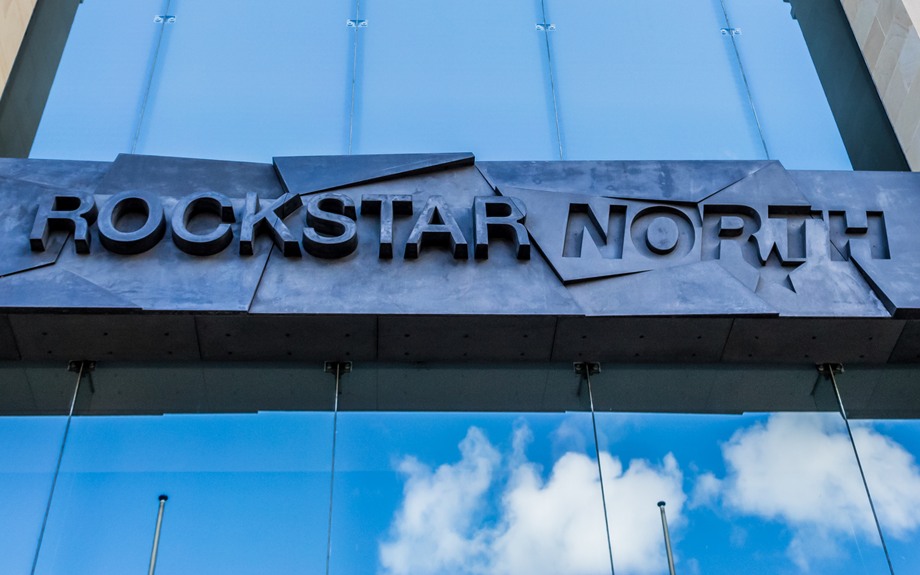
Neill was one of 34 workers summarily dismissed by Rockstar on October 30 and 31 last year — just days before the company announced that the highly anticipated GTA 6 would be delayed. The official reason? Alleged leaking of confidential information. But the dismissed workers and their union, the Independent Workers’ Union of Great Britain (IWGB), are telling a very different story: one of illegal union-busting, procedural cruelty, and a blatant disregard for workers’ rights.
A “Bolt From the Blue”
The dismissals targeted workers across Rockstar’s Edinburgh, Dundee, and Lincoln sites in the UK, as well as three in Canada. According to the company, the workers were sacked for “gross misconduct” related to discussing and sharing confidential information on a Discord channel.
But those who lost their livelihoods paint a picture of an employer that offered no evidence, no due process, and no humanity.
Lloyd Knott, formerly a lead visual effects artist at Rockstar North in Edinburgh, described his dismissal as a “bolt from the blue.” At his termination meeting, he asked what he was supposed to have done. “They said everything was in the envelope on the desk,” he recalls. “It was basically just a dismissal letter; there was no documentation about what I was meant to have done.”
Jack Hoxby, who worked in Quality Assurance at Rockstar North, was summoned to a meeting at short notice — without the right to bring a union representative. Like his colleagues, he believes he was targeted for one reason only: union membership.
“Everyone [who was fired] was a member of the union, a member of the Discord that was named Rockstar Workers’ Discord,” Hoxby said. “A huge percentage of the organising committees at each studio were also fired.”
A Secure Space for Union Organising
The Discord channel at the center of the dispute was, according to the workers, a private, invite-only, and non-discoverable space — carefully moderated to verify that members were either Rockstar employees or IWGB officials. Its purpose? To discuss unionising the company and improving working conditions.
“We believe that all activity within our channel was legitimate trade union activity protected by UK law,” Neill stated. “All discussions did not amount to a disclosure of confidential information.”
That assessment is backed by independent reporting. YouTube channel People Make Games spoke to a Rockstar source who told them there wasn’t a single example of confidential game details being shared on the Discord. Instead, discussions frequently centered on Rockstar’s changing policies regarding its internal messaging service, Slack — a perfectly legitimate topic for workers to discuss collectively.
Timing That Raises Questions
The timing of the mass sackings is deeply suspicious. Just before the dismissals, the IWGB had reached the 10% union density membership threshold — the point at which it could apply to the Central Arbitration Committee (CAC) for statutory recognition as the recognised union at the company.
In other words, Rockstar’s workers were on the verge of securing formal union recognition. Then, suddenly, more than 30 of the most active union members were fired.
At an interim relief hearing in Glasgow, Lord Hendy — representing the workers — argued that the gross misconduct allegation was nothing more than a “smokescreen” for a coordinated mass dismissal aimed at suppressing trade union activity.
The Human Toll
For those fired, the consequences have been devastating.
Neill, who gave 12 years of his life to Rockstar, has taken a job at an Edinburgh supermarket to support his family — a far cry from the career he built in game development.
Hoxby, meanwhile, is struggling to make ends meet. “I don’t know how I’m going to pay my bills. I live in Edinburgh; it’s a very expensive city,” he said. “It’s put a big question mark on my future in the industry, which is a bit of a shame as I do genuinely love the games industry.”
For Knott, the brutality of the process has taken a severe toll on his health. “My stress levels were through the roof. I wasn’t sleeping properly, I wasn’t eating properly, and I was just getting ill,” he said. “It’s been up and down ever since.”
Some non-British former employees now face the prospect of having to leave the country entirely.
Rockstar’s Shifting Story
Rockstar has maintained that the dismissals were purely about protecting confidential information. In a statement to Bloomberg shortly after the sackings, the company said it “took action against a small number of individuals who were found to be distributing and discussing confidential information in a public forum.”
But at the interim relief hearing, Rockstar’s own arguments appeared to shift. According to Chris Bratt from People Make Games, who attended the hearing, Rockstar claimed employees had created a channel containing “top-secret” information about GTA 6, and that disparaging comments had been made about management.
The IWGB has pointed out the contradictions. Spring McParlin-Jones, chair of the Game Workers branch, noted that if Rockstar genuinely believed confidential information was at risk, it had other options: “They could have approached the IWGB, they could have attempted to have certain posts removed, or they could have requested that the server be taken down entirely. Rockstar did none of this.”
McParlin-Jones also highlighted a telling detail: at the hearing, Rockstar included the alleged “top secret” information in its own evidence and made no effort to redact it, despite repeated reminders from the judge that it would become publicly available. “Most of this allegedly risky information is now already in the public domain,” she said.
A Pattern of Conduct
Rockstar’s treatment of its workers doesn’t exist in a vacuum. The company has also been exposed by the UK’s Department for Business and Trade for failing to pay £1,396.73 to five workers — discrepancies based on minimum wage violations.
This is an industry giant that generates billions in revenue from one of the most successful entertainment franchises in history. Yet it appears to have no qualms about sacking workers on paternity leave, denying them union representation, and leaving them to wonder how they’ll pay their bills.
Workers Fight Back
Despite the intimidation, the dismissed workers are not backing down. More than 220 Rockstar employees signed a letter demanding “the immediate reinstatement of their colleagues.” Protests have been held outside Rockstar headquarters in Edinburgh, Take-Two Interactive’s London office, and even the company’s Paris office, with French game workers union STJV showing solidarity.
The sacked workers are pursuing employment tribunal claims with IWGB support. And they’ve gained political attention: when Labour MP Chris Murray raised the issue at Prime Minister’s Questions, Sir Keir Starmer called it “deeply concerning” and affirmed that “every worker has a right to join a trade union.”
What’s at Stake
IWGB president Alex Marshall put the case in stark terms: “We are confident that what we’ve seen here is plain and simple union busting, and we will mount a full legal defence with our expert group of caseworkers, legal officers and barristers. Employers like Rockstar would do well to understand that private spaces such as trade union Discord servers have protections, and that their company’s contractual clauses do not supersede UK law.”
Marshall’s message to employers across the gaming industry and beyond is unambiguous: “This case stands as a warning to any employer in the games industry and beyond who thinks they are able to act with impunity against organised workers — we will not be intimidated.”
A Watershed Moment
The Rockstar sackings have become a test case for workers’ rights in the gaming industry — a sector notorious for crunch culture, precarious employment, and fierce resistance to unionisation. What happens next could set a precedent that reverberates far beyond Edinburgh.
For the 34 workers fired, the fight is personal. It’s about paternity leave interrupted, careers derailed, and financial security shattered. But it’s also about something larger: the fundamental right of workers to organise collectively without fear of retaliation.
As Neill put it: “I don’t believe that an American company should be able to apply American-style law in the sense of a summary firing that they can do in certain parts of the United States.”
Rockstar may have thought it could silence its workers with a wave of sackings. Instead, it has sparked a movement. The workers, their union, and a growing coalition of supporters are making it clear: no matter how powerful the employer, the right to organise is not up for negotiation.
And for Jack Hoxby, who still loves the industry that just cast him aside, the fight is about more than his own future. It’s about ensuring that what happened to him and his colleagues doesn’t become the template for how gaming workers are treated.
“It’s been very distressing in general,” he said. But his determination, and that of his former colleagues, suggests that this story is far from over.