For decades, a deadly mineral fibre was woven into the very fabric of modern life. From insulation in homes and schools to brake pads in cars and fireproofing in ships and skyscrapers, asbestos was hailed as a "miracle mineral" for its strength and heat resistance.
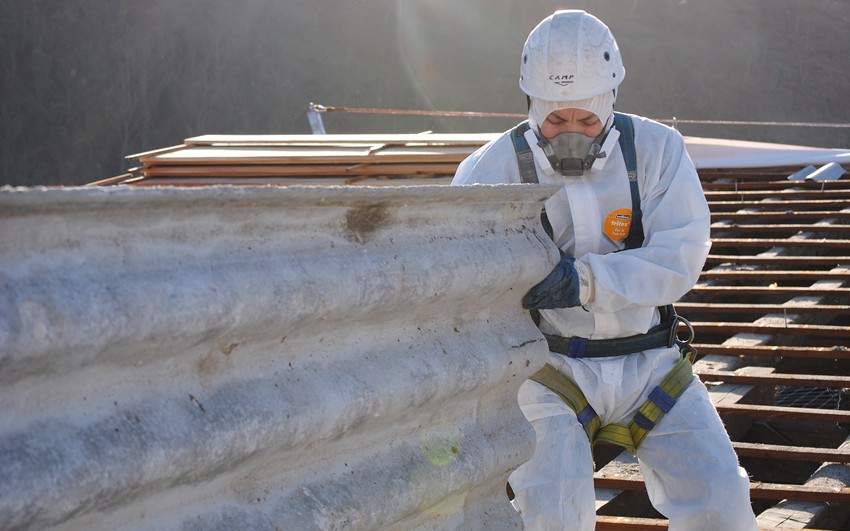
Behind this public image of progress lay a grim reality: asbestos is a potent carcinogen, and the companies that profited from it knew it for generations, systematically covering up the truth and sacrificing countless lives.
The Deadly Science
The health risks of asbestos are severe and well-documented. When its microscopic fibres are disturbed, they become airborne and can be inhaled or ingested. Once inside the body, they are nearly impossible to remove. These sharp, durable fibres cause chronic inflammation and genetic damage, leading to diseases that often take 20 to 50 years to manifest:
- Mesothelioma: A rare and aggressively fatal cancer almost exclusively caused by asbestos exposure, affecting the lining of the lungs, abdomen, or heart.
- Asbestos-Related Lung Cancer: A significant contributor to lung cancer deaths, particularly among those also exposed to smoking.
- Asbestosis: A progressive, scarring lung disease that causes severe shortness of breath and can be debilitating or fatal.
- Other Cancers: Links have been established to cancers of the larynx and ovaries.
There is no safe level of exposure. The World Health Organisation estimates that asbestos exposure still causes over 100,000 deaths annually worldwide.
The Cover-Up: A Timeline of Deceit
The corporate cover-up is not a story of recent negligence but of a century-long, deliberate conspiracy.
Early Warnings (Early 1900s): Medical reports linking asbestos to lung disease appeared in British medical journals as early as the 1890s. By the 1910s and 1920s, insurance companies in the UK and US were noting the high mortality rates among asbestos workers. Internal company memos from industry giants reveal that medical officers and executives were well aware of these "dusty lung" problems.
The Summit of Secrecy (1930s-1960s): Instead of acting to protect workers, the industry chose secrecy. A pivotal moment came in the 1930s when major asbestos firms and their legal counsel conspired to suppress and alter unfavourable health studies. This set a pattern. For decades, the industry:
- Funded its own research, then buried unfavourable results.
- Exerted pressure on external researchers and publications.
- Avoided conducting long-term epidemiological studies that would provide damning evidence.
- Fought against the implementation of dust control and safety standards in factories and shipyards across the UK's industrial heartlands.
The Smoking Gun Memo (1966): Perhaps the most infamous piece of evidence is a 1966 memo from an asbestos industry president to an industry insulation group. It discussed the need for medical research but contained this chilling line: "Our interest, of course, is in protecting our operating people and at the same time the industry… We can’t afford to lose one order." Profits were explicitly prioritised over human life.
Doubting and Delaying (1970s-Present): Even as public awareness grew, the industry shifted to a strategy of manufacturing doubt. They funded counter-research, challenged the science, lobbied aggressively against bans, and prolonged litigation to exhaust victims and their families. This playbook successfully delayed a full UK ban for years. While blue asbestos (crocidolite) was banned in 1985 and brown asbestos (amosite) in 1992, it was not until 1999 that the UK finally instituted a complete ban on all asbestos use.
The Legacy and the Fight for Justice
The cover-up unravelled through the courage of whistleblowers, investigative journalists, and trade unions. Landmark lawsuits and public inquiries forced millions of pages of internal documents into the public eye, proving the industry's knowledge and deceit.
The fallout was catastrophic:
- A National Epidemic: The UK now has one of the highest rates of mesothelioma in the world, a direct legacy of its heavy industrial use of asbestos throughout the 20th century. Thousands of workers – from shipbuilders on the Clyde and Tyne to construction teams, factory hands, and even teachers in system-built schools – were unknowingly placed in harm's way.
- Ongoing Risk: The Health and Safety Executive (HSE) emphasises that much of this asbestos remains in situ in buildings, posing a continuous risk to maintenance, construction, and demolition workers if not properly managed.
- An Ongoing Crisis: Because of the long latency period, around 2,700 people in the UK are still diagnosed with mesothelioma each year, stemming from exposures that occurred decades ago. Charities like Mesothelioma UK and the Asbestos Victims Support Groups Forum continue to provide crucial support.
A Cautionary Tale
The story of asbestos is a stark lesson in the perils of unregulated corporate power and the deadly cost of prioritising profit over people. It stands as a monument to the need for robust, independent scientific regulation, transparent public health policy, and the eternal vigilance required to ensure that those who create risks are held accountable for the consequences. The dust may have settled in many old factories, but the fight for justice for victims and for the safe management of the UK's asbestos legacy continues, ensuring that this silent assassin’s history is never forgotten—or repeated.