By a Veteran of The Rifles and Special Forces Support Group
I joined the Army at 17. By 24, I had seven years of service, two frontline tours in Afghanistan, and a body and mind scarred by combat. I was shot at, rocketed, blown up, and saw friends obliterated by IEDs. I was injured and evacuated. As I wrote in my account, "I think from these experiences I have gained a well rounded experience of modern warfare and military life in general. I do not say this as some kind of boast or to portray myself as some kind of expert, just to give some context."
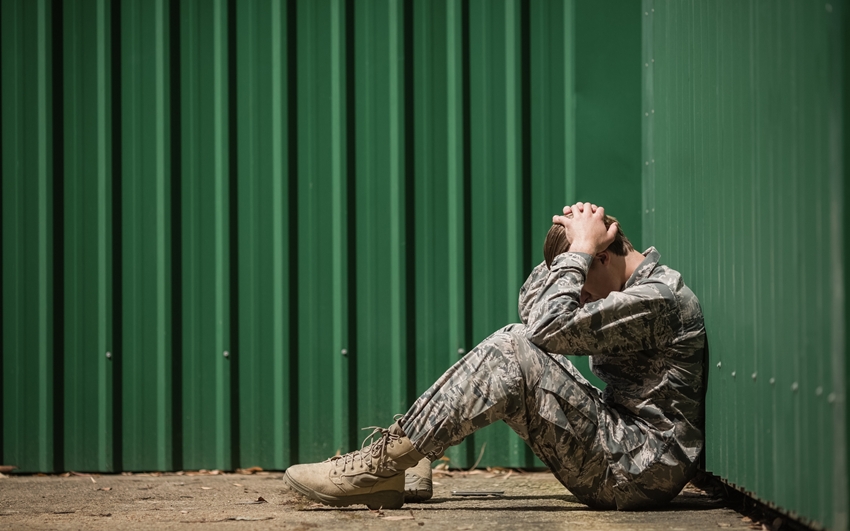
Yet, the trauma that lingered—the depression that engulfed me for years after leaving—wasn't primarily from the battlefield. "It was not combat trauma that lead to any of my mental health issues or returning to a civilian life. It was the training itself." This is the silent epidemic among veterans: a struggle forged not in war, but in the barracks.
Upon leaving, I found my peers suffering in silence. We had been conditioned to see mental struggle as weakness. "During my Army service I did not believe in PTSD or depression and thought that struggling with mental health was a sign of weakness. I also now understand that this way of thinking was a mindset that the military had conditioned into me through training." This culture is not an accident; it is a byproduct of a system that begins by recruiting adolescents as young as 16.
The Manufacturing of a Soldier: A Psychological Deconstruction
The Army states its aim is to "break a civilian down and build them back up as a soldier." This sanitised language hides a profound reprogramming. I believe this process is fundamentally at odds with healthy human development.
1. The Death of Critical Thought: "Follow Orders Without Question"
From the first day, your own thoughts are rendered irrelevant. "You are actively taught to ignore your own thoughts, feelings, emotions and reactions and to only do what is ordered of you." Deviation brings group punishment, a brutal lesson in conformity. Your mind becomes a vessel for commands.
2. Cult-Like Loyalty and Tribal Exceptionalism
Your identity is stripped. This severs your connection to society, fostering disdain for "civilians." "The very people you joined to protect are now known as ‘civi cunts’ ‘lizards’ ‘pond life’... that know nothing of the military and any of the values you now hold yourself to. Being a civilian now would now mean failure." This engineered alienation makes the transition home a perceived defeat.
3. Systematically Removing the Aversion to Kill
This is the core function. The military must erase our natural aversion. Through dehumanising language, repetitive drills, and peer pressure, they rewire the brain. "By the end of training all an Infantry soldier wants to do is go to war and kill the enemy, It bears no consequence of war or the reasons behind the war, all a soldier wants to do is his job." This is not a natural evolution; it's deliberate psychological engineering.
4. Hijacking Survival Instincts
The most profound rewiring is of fight or flight. "The Army would want you to run at the car and towards mortal danger." It inverts a million years of evolutionary instinct for self-preservation.
The Human Cost and the Institutional Denial
The Ministry of Defence understands this process. It is a masterpiece of compartmentalisation, where each trainer is "so focused on your small part within it." But the institution knows. "The training staff may be unaware of the psychological damage being caused but make no mistake the MOD is not and is fully aware of what it is doing." They produce effective soldiers and accept the psychological collateral damage.
For a 16-year-old with a developing brain, this conditioning is catastrophic. We deem them too immature to vote, yet allow them to volunteer for this. "So how can we then allow a 16 year old to make the decision to volunteer to be put through mental conditioning, learn to kill and sign years of there life over in an oath to the queen?"
They are uniquely susceptible to glamorised recruitment ads—ads that never mention the lifelong mental health battle. "I joined the Army based on watching a documentary on the Iraq war. This documentary was a highly glamorised one sided view of the conflict and I made a quick decision wanting to seek adventure and approval."
A Call for Change: Protecting Our Youth
"Knowing what I know now I would not sent a child of 16 into this environment." This is a workers' rights issue. These young people are employees of the state. They deserve the right to informed consent about the psychological risks, and the right to a nation that does not treat their developing minds as raw material.
My recovery began when I understood my struggles were not a personal failing, but the logical result of the system that built me. We must stop this production line for children. "We as a nation should have an obligation to not allow 16/17 year olds to be allowed to enter the military at that age." It is an act of profound respect for the well-being of our youth to raise the recruitment age to 18. We owe them more than a broken mind and a battle for peace they were never prepared to fight.
Source: Veterans for Peace UK